So, you’re wondering where that ONE HUNDRED AND NINETY millimeter ground clearance figure for the Chery Tiggo FOUR/Pro comes from? It’s a question a lot of people ask, and honestly, it’s not as straightforward as you might think. Manufacturers often quote a theoretical maximum clearance, measured under ideal conditions. This means a brand-new car, perfectly aligned suspension, and a completely empty vehicle. In the real world, things are rarely that perfect.
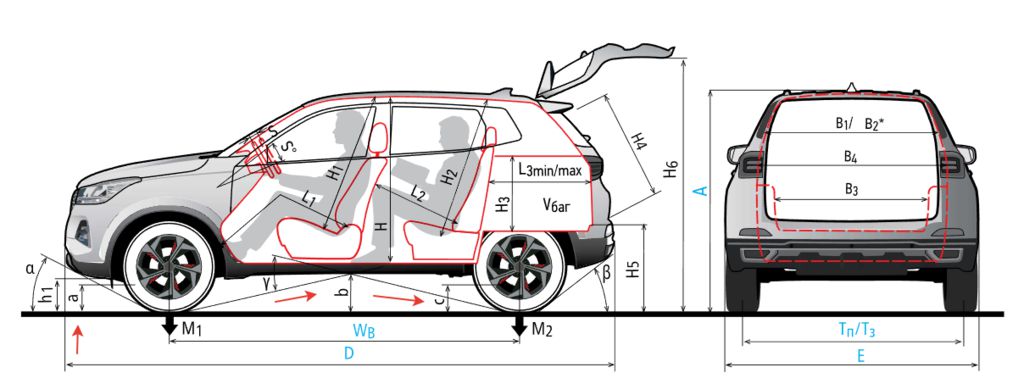
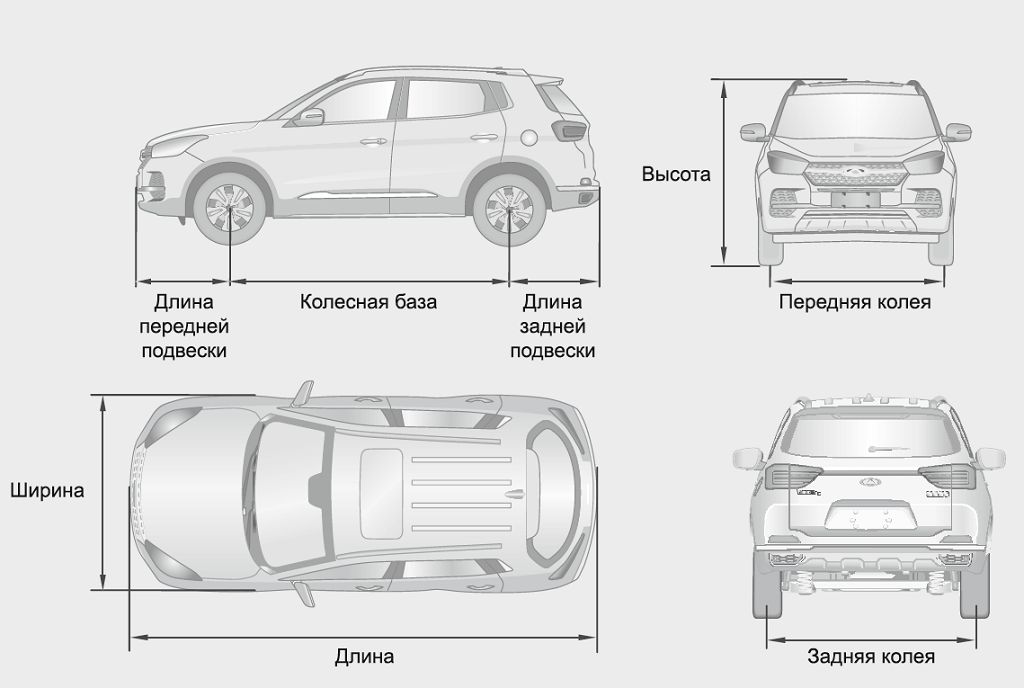
Let’s talk about the basic geometric characteristics that influence ground clearance. First, we have the suspension. The Tiggo FOUR/Pro uses a fairly standard independent MacPherson strut setup at the front and a torsion beam at the rear. These designs, while cost-effective and generally reliable, have inherent limitations in terms of how much ground clearance they can provide. The design of the suspension components themselves – the control arms, springs, shocks – all contribute to the minimum distance between the lowest point of the vehicle and the ground. Think about it – even if the tires are inflated perfectly, the suspension components themselves will have a certain minimum height.
Then there’s the underbody. The exhaust system, the fuel tank, various control modules, and other components all sit below the chassis. The lowest point of these components often dictates the actual ground clearance, especially when considering uneven terrain or obstacles. We’re not just talking about the distance from the ground to the bottom of the tire; we’re talking about the lowest point of everything hanging down below. And this is where the ONE HUNDRED AND NINETY millimeter figure can become a bit misleading. That number might represent the clearance at a specific, very carefully chosen point on the underbody, perhaps in a completely unloaded and perfectly aligned vehicle.
Now, let’s consider the real-world implications. Add passengers, luggage, and a full tank of fuel, and that ONE HUNDRED AND NINETY millimeters will decrease. The weight of the car will compress the suspension, reducing the ground clearance. Drive over a bumpy road, and the suspension will constantly be adjusting, meaning the actual ground clearance will fluctuate. And let’s not forget about the tires themselves. Tire wear, inflation pressure, and even the type of tire all play a role in the effective ground clearance. A slightly under-inflated tire will immediately reduce the clearance.
So, while the manufacturer might advertise ONE HUNDRED AND NINETY millimeters, the reality is likely to be somewhat less, depending on a variety of factors. It’s crucial to understand that this figure is a theoretical maximum, and the actual ground clearance you experience will vary considerably depending on the conditions. We’ll now take a closer look at the vehicle itself and measure the ground clearance in various points to give you a more realistic picture. We’ll be checking the front, the rear, and the center, under different loading conditions, to show you the real-world ground clearance of the Chery Tiggo FOUR/Pro.
Okay, folks, let’s talk about something crucial for anyone considering a Chery Tiggo FOUR or Pro – ground clearance. You see that ONE HUNDRED AND NINETY millimeter figure thrown around? Well, let’s get real. We’re going to dive deep into where that number comes from and whether it reflects the reality of driving this vehicle. We’ll be looking at the actual ground clearance, measuring it ourselves, and comparing it to what Chery claims. It’s important to be aware of the potential discrepancies, because this can significantly impact your driving experience, especially on uneven roads or off-road adventures. We’ll be examining the undercarriage, looking at the lowest points, and seeing how ONE HUNDRED AND NINETY millimeters translates to real-world driving conditions. We need to be thorough here, because this is a key factor for many buyers.
Now, let’s compare the Chery Tiggo FOUR/Pro’s ground clearance to other Chinese crossovers in its class. This is where things get interesting. We’ll be looking at several competitors, examining their claimed ground clearance figures and then comparing those figures to real-world measurements, just like we did with the Tiggo. This comparative analysis will give us a much clearer picture of how the Tiggo FOUR/Pro stacks up against its rivals. We’ll be looking at factors like suspension design, wheel size, and overall vehicle architecture to understand why there might be variations in ground clearance between these models. It’s not just about the numbers; it’s about understanding the practical implications of those numbers in everyday driving. We’ll be looking at specific examples of how different ground clearance affects maneuverability, ride comfort, and overall driving experience. We’ll also consider the types of roads and terrains where these vehicles are typically driven, and how ground clearance plays a role in their suitability for those conditions. This is crucial for anyone looking to make an informed decision. We’ll be comparing not just the numbers, but also the real-world performance of these vehicles.
Remember, always double-check the specifications and conduct your own research before making a purchase. This isn’t just about the ONE HUNDRED AND NINETY millimeters; it’s about understanding the complete picture and making sure the vehicle meets your needs. We’re aiming to provide you with the information you need to make the best decision for your driving style and circumstances. We’ll be looking at various factors that can influence ground clearance, and how these factors might vary between different models and even individual vehicles. This is a comprehensive look at the ground clearance issue, and we hope it helps you in your decision-making process.

- Читайте также: