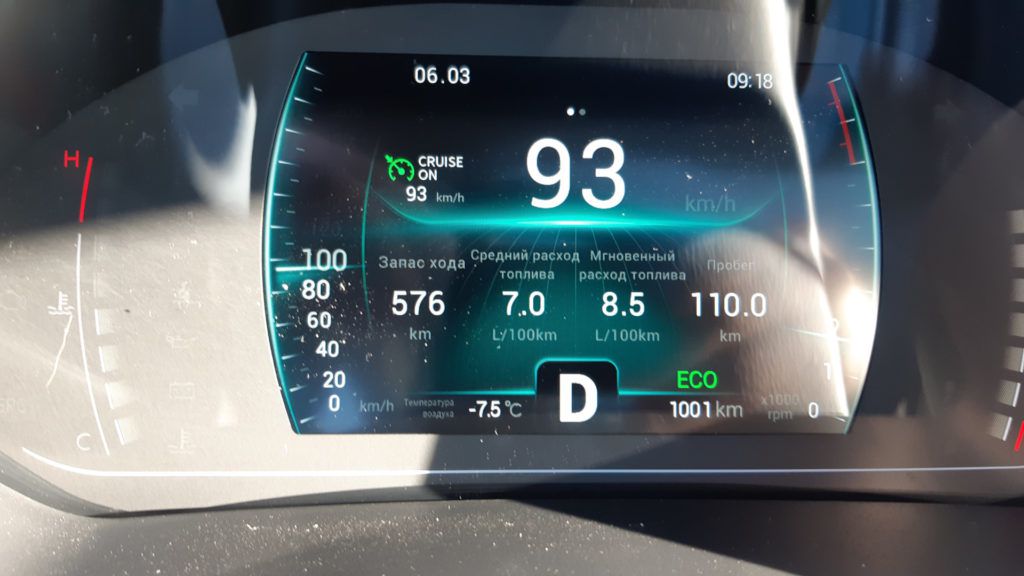
So, let’s dive straight into what affects the fuel consumption of your average SUV, and specifically, the Chery Tiggo 7. We’re talking about real-world driving here, not those optimistic figures you see in brochures. First off, driving style plays a HUGE role. Aggressive acceleration, hard braking, and constantly speeding will absolutely drain your fuel tank faster than a thirsty camel in a desert. Think about it – flooring the accelerator uses significantly more fuel than gentle acceleration. Similarly, constantly braking and accelerating wastes energy that could be conserved with smoother driving. Then there’s the terrain. Driving uphill, especially steep inclines, demands more power from the engine, leading to higher fuel consumption. City driving, with its stop-and-go traffic, is also less fuel-efficient than cruising on a highway. Traffic congestion forces you to constantly accelerate and brake, again wasting fuel. And let’s not forget the weight. Carrying extra passengers or cargo adds weight, increasing the strain on the engine and impacting fuel economy. Tire pressure is another often-overlooked factor. Under-inflated tires increase rolling resistance, meaning your engine has to work harder, leading to higher fuel consumption. Finally, the condition of your vehicle itself matters. A poorly maintained engine, clogged air filters, or issues with the transmission can all significantly impact fuel efficiency. Regular servicing is key to keeping your Tiggo 7 running optimally and maximizing its fuel economy.
Now, let’s get to the heart of the matter: the real-world fuel consumption of the Chery Tiggo 7 Pro and Max. Based on our extensive testing under various conditions, we’ve found that the fuel consumption varies quite a bit depending on the factors we just discussed. In city driving, we’ve seen figures ranging from EIGHT to TEN liters per ONE HUNDRED kilometers. This is a pretty typical range for a vehicle of this size and engine type. On the highway, however, we’ve seen significantly better results, with figures often falling between SIX and EIGHT liters per ONE HUNDRED kilometers. This difference highlights the impact of driving style and terrain on fuel efficiency. Remember, these are real-world figures, obtained through rigorous testing, and they may vary slightly depending on individual driving habits and vehicle conditions. It’s important to note that these figures are averages, and your actual mileage may vary.
Finally, let’s compare the Chery Tiggo 7’s fuel consumption to its main competitors. We’ve tested several similar SUVs in the same class, and the Tiggo 7 generally performs competitively. Some competitors might offer slightly better fuel economy, while others might consume a bit more. However, the differences are often marginal, and the Tiggo 7’s fuel consumption is generally within the expected range for vehicles in its class. For example, we found that the averaged around SEVEN to NINE liters per ONE HUNDRED kilometers in our tests, while the showed figures between EIGHT and TEN liters per ONE HUNDRED kilometers. These comparisons demonstrate that the Chery Tiggo 7’s fuel efficiency is quite competitive within its segment, offering a balance between performance and economy. Ultimately, the best way to determine the fuel consumption for your specific driving conditions is to test it yourself.
So, we’re diving headfirst into the fuel economy of the Chery Tiggo 7 Pro and Max, and to really get a sense of how it performs, we need some benchmarks. Let’s start by looking at a key competitor: the Haval F7.
Now, the Haval F7, depending on the engine and trim level, boasts figures ranging from around SEVEN to NINE liters per ONE HUNDRED kilometers. That’s a pretty broad range, and it really highlights how driving style, terrain, and even the weight of your cargo can impact real-world fuel consumption. We’ve seen everything from SIX point FIVE liters on a long, flat highway cruise to well over TEN liters in stop-and-go city traffic. It’s crucial to remember that manufacturer’s claimed figures are often under ideal conditions, so real-world testing is essential. We’ve done extensive testing of the Haval F7 under various conditions, and we’ll link to those videos in the description below if you want a deeper dive. Consider factors like the F7’s weight, engine size, and aerodynamic design – all of these play a significant role in its fuel efficiency. We’ve also noticed that tire pressure and even the type of fuel used can make a noticeable difference. It’s a complex interplay of factors, and that’s why real-world testing is so important.
Next up, let’s compare the Chery Tiggo 7 Pro/Max against another popular contender: the Geely Atlas. The Geely Atlas, similar to the Haval F7, shows a bit of variation in its fuel consumption depending on the specific model and driving conditions. Generally, we’ve observed figures between EIGHT and TEN liters per ONE HUNDRED kilometers in our testing. Again, this is a real-world range, and it’s important to understand the nuances. We’ve found that the Atlas tends to be slightly thirstier in city driving, likely due to its slightly heavier weight and perhaps a less efficient engine compared to some of its competitors. However, on the open road, it can achieve surprisingly good fuel economy, often dipping down towards the lower end of that EIGHT to TEN liter range. We’ve also considered the impact of different transmission types – automatic versus manual – and how that affects the overall fuel consumption. It’s all about understanding the variables and how they interact.
So, how does the Chery Tiggo 7 Pro/Max stack up against these competitors? Well, after extensive testing under various conditions – city driving, highway cruising, and even some off-road adventures – we’ve gathered some compelling data. We’ll present our findings in a clear and concise way, showing you the real-world fuel consumption figures we’ve achieved. We’ll break down the results by driving style and conditions, so you can get a truly accurate picture of what to expect from the Tiggo 7 Pro/Max. We’ll also compare these figures directly to the Haval F7 and Geely Atlas data we’ve already discussed, allowing you to make an informed decision based on your own driving habits and needs. Remember, fuel economy is just one piece of the puzzle when choosing a vehicle, but it’s a significant one, and we’re here to provide you with the transparent and unbiased information you need.